
Last updated November 25, 2026
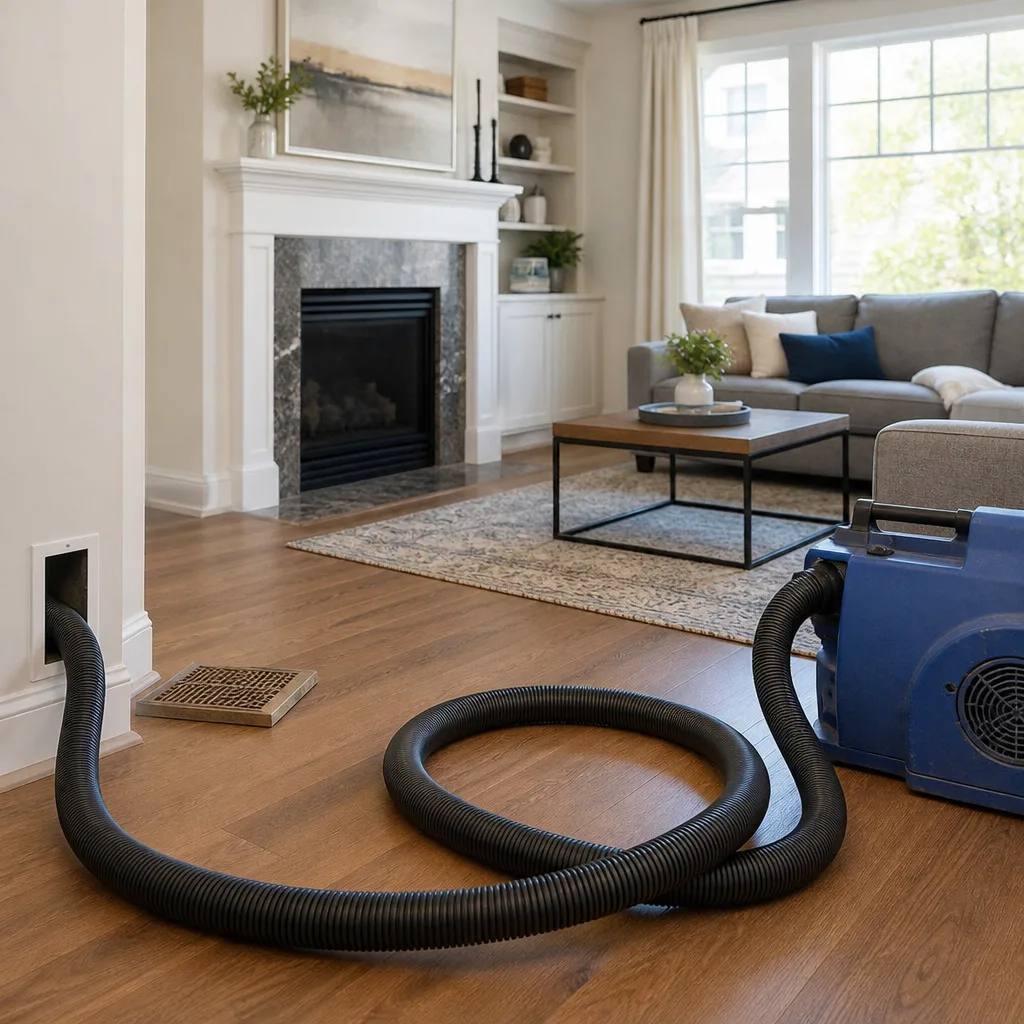 Whole-home duct cleaning
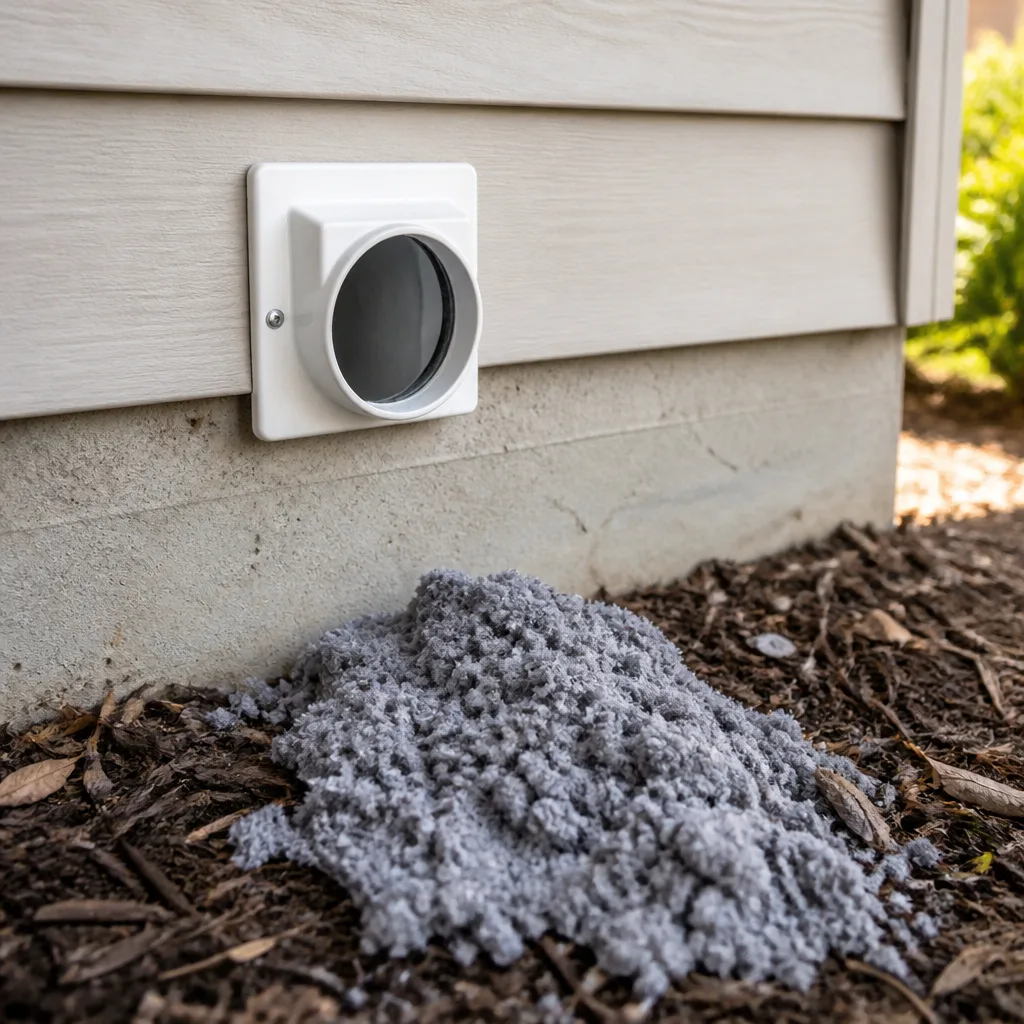 Dryer vent cleaning
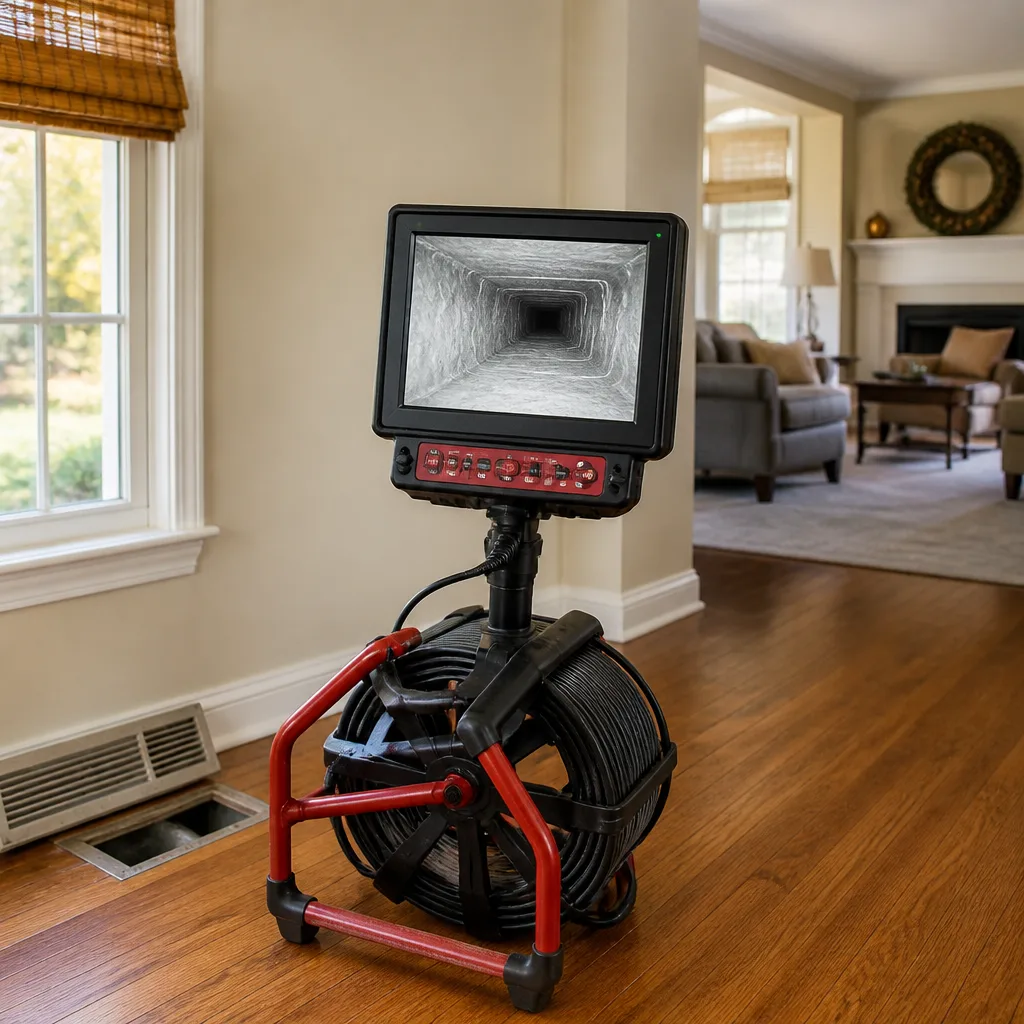 Camera inspection
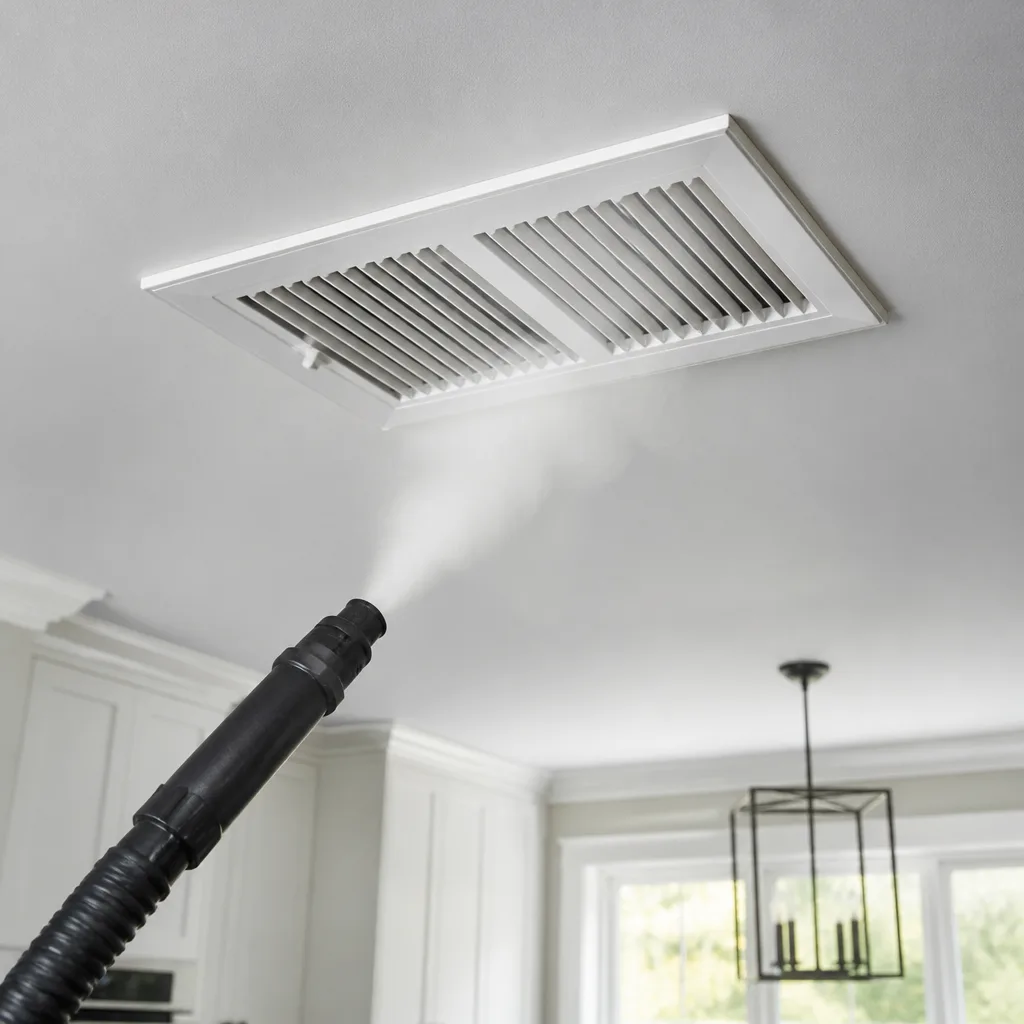 Sanitizing & deodorizing
Whole-system duct and dryer vent check with before-and-after photos - you see exactly what came out of your vents
That "$99 whole-house special" is a bait ad - the real number appears once they are in your hallway, or the "clean" is a shop-vac at the register. We photograph the inside of your ducts before and after instead.
Air Duct Cleaning Warning Signs: A Great Kills Homeowner’s Reference Guide
A dust plume puffing out of a supply register looks alarming, and most homeowners read it as proof their ducts are filthy. Usually it isn’t. That plume is the signature of a filter that has failed, collapsed, or been bypassed at the cabinet, which means the air handler is pulling unfiltered air and pushing it straight into the rooms. Real duct contamination announces itself differently: an odor that arrives the moment the blower starts, a room that never heats or cools like the rest of the house, or staining that shows up where ductwork meets the wall. Confusing filter failure with duct contamination sends people to the wrong service, and sometimes to the right service for the wrong reason.
In this guide we walk through the warning signs one by one and explain what each one actually points to inside the duct system. You’ll learn how to tell filter trouble from contamination from biological growth, what staining around registers really means, which post-renovation signs matter in Great Kills homes, and how to spot duct damage that cleaning alone will never fix. The goal is simple: when you call a technician, you should be able to describe what you’re seeing precisely enough to get the right work done.
Quick Answer
The main warning signs that ducts need attention are an odor that appears when the system starts up, uneven airflow between rooms, visible dust tracked through the return grille, dark staining around supply registers, and debris left in the system after remodeling. The critical skill is telling contamination apart from filter failure and duct damage, because each calls for a different fix. A professional inspection starts with the filter and the blower cabinet, then moves into the duct runs themselves before any cleaning is scoped.
Styles & brands we work with
- Whole-home duct cleaning
- Dryer vent cleaning
- Camera inspection
- Sanitizing & deodorizing
Table of Contents
- Filter failure or dirty ducts? The distinction that matters most
- Warning sign 1: an odor that only shows up at startup
- Warning sign 2: dark staining around supply registers
- Warning sign 3: debris left after a renovation
- Warning sign 4: traces of past pest activity
- Warning sign 5: rattling, temperature swings, and crushed flex duct
- Warning sign 6: musty smell that survives a filter change
- How a proper duct inspection actually works
Filter Failure or Dirty Ducts? The Distinction That Matters Most
Dust coming out of a supply register is a filter and cabinet problem far more often than a duct problem. The filter sits upstream of the blower, and if it’s torn, the wrong size, sagging in its frame, or simply missing, unfiltered air pours through the gap and gets distributed to every room. A filter that’s heavily loaded but still sealed does the opposite: it starves the system of air, which shows up as weak airflow rather than visible dust. Those two failure modes look nothing alike, and neither one means your ducts are dirty.
Here’s how to sort the two apart before you call anyone:
- Pull the filter and hold it up to a light. Uniform gray loading is normal. A visible hole, a collapsed pleat, or a filter that’s clearly smaller than the slot all point to bypass.
- Look at the cabinet edges around the filter slot. A clean line of dust on the ledge of the cabinet is what bypass looks like in practice, because air slips past the frame.
- Note which registers show dust. If every register in the house does, suspect the filter or blower cabinet. If one register does, suspect that branch run or the boot at the wall.
- Watch the blower start. Dust that puffs out at startup and then stops is often settled dust in the cabinet being disturbed, not contamination living in the ducts.
This distinction matters for money. A homeowner who books a full cleaning to solve a bypassed filter pays for work they didn’t need and still has the problem afterward. Any technician who inspects honestly will check the filter and cabinet first, and in Great Kills that step alone resolves a surprising share of “my ducts are dusty” calls. If the cabinet and filter come back clean, then the conversation moves into the duct runs themselves.
Warning Sign 1: An Odor That Only Shows Up at Startup
An odor that arrives in the first thirty seconds of the blower running and fades afterward is one of the most reliable contamination signals there is. It behaves that way because the odor is sitting in the ductwork and gets pushed into the rooms along with the first slug of air, then dilutes as the system settles. If the smell instead builds slowly and lingers for the whole cycle, look at the return path and the cabinet, and check whether anything near the return grille is contributing. The timing of an odor is diagnostic, and it’s worth paying close attention to where in the cycle it appears.
What the timing usually points to:
- Odor at startup only: settled material in the supply trunks and branch runs, typically fine dust mixed with building residue.
- Odor that builds through the cycle: the return side, an obstructed or loaded filter, or material sitting on the blower wheel.
- Odor in one room only: that branch run or the boot where it connects to the register.
- Odor that smells like a basement or attic rather than a house: a duct run passing through unconditioned space with a leak pulling in outside air.
For Great Kills homes, many of which were built mid-century with additions layered on later, supply trunks often run through a mix of conditioned and unconditioned space. A run that crosses a cold attic or crawl area will pull that air back in through any gap in the joints. In our experience, the fix in that case is less about cleaning and more about finding the leak, which is why sealing work belongs in the same conversation as cleaning. When we scope a job, the odor pattern is one of the first things we ask about, because it tells us where in the system to look before we open anything up.
Warning Sign 2: Dark Staining Around Supply Registers
Dark staining around a supply register is often read as proof of dirty ducts, and sometimes that’s the right call. Just as often, the stain is the fingerprint of air leaking out of a poorly sealed joint and collecting dust on the wall surface over time. The mechanism is simple. Air escaping at the boot matches a gap between the duct and the drywall, deposits fine particles on the wall as it passes, and the streak builds slowly until it’s visible. In a house where several registers show the same pattern, that’s a sealing problem as much as a cleaning problem, which is why we treat the two together rather than as separate visits.
What to note before you call:
- Whether the staining is a soft dark ring around the grille or a sharp line where the drywall meets the boot.
- Whether the pattern appears at every register or just a few on one branch.
- Whether the stain is on the wall, the ceiling, or the grille face itself.
- Whether you can feel air moving at the gap between the grille and the drywall when the system is running.
Air that escapes at an unsealed boot also means less air reaches the room, so staining and weak airflow often appear at the same register. That’s the tell: the room with the darkest ring is usually the room that doesn’t heat or cool as well as the rest of the house. We see this all the time in Great Kills homes where the duct system was extended for an addition and the new runs were connected without sealing the boot to the wall. Cleaning alone won’t stop the stain from returning, because the leak is still there. Sealing the joint closes the loop, and the stain stops building.
Warning Sign 3: Debris Left After a Renovation
Post-renovation duct debris is one of the most overlooked contamination sources in any home, and it’s specific and measurable. Drywall dust is fine enough to stay suspended and travel through the whole system. Fiberglass particles from insulation work ride in on the same air. Construction debris like sawdust, bits of trim, and small screws can fall into open duct runs when the crew is working overhead. If a return grille was left uncovered during the work, everything the crew kicked up in that room found its way into the system. Great Kills has a lot of homes where additions, kitchen remodels, and finished basements have been done across multiple decades, and the signs often show up years later when someone notices a new odor or uneven airflow.
Signs to watch for after any interior project:
- Fine white or gray dust settling on horizontal surfaces in one part of the house more than anywhere else.
- Returns that look cloudy or chalky on the inside when you shine a light through the grille.
- A smell that changes when you run the system, especially after the crew first turned it back on.
- Airflow weaker than before the work, which often means a run is partially blocked by material that fell in.
The window matters. Debris sitting in the system for years has more time to settle into the joints and the boot connections. If the project wrapped recently, the debris is still loose and easier to remove cleanly. Either way, the work is best done with containment and negative air pressure so the cleaning doesn’t blow the same material back into the rooms. Abatement Technologies containment is standard on our jobs for exactly that reason, because a remodel cleanup done without containment just moves the problem around.
Warning Sign 4: Traces of Past Pest Activity
Pest activity in ductwork is one of the few signs that changes the scope of the job entirely, because standard cleaning alone won’t handle it. Rodents and insects leave behind nesting material, droppings, and residue that can sit in the duct runs and the boots without ever showing up in the rooms. Pest debris is a biohazard rather than a dust problem, and it needs sanitizing after mechanical cleaning, not just dust removal. In Great Kills homes with older duct runs and attic or crawl space access, this is one of the most common reasons a cleaning job turns out to be more than a cleaning job. The signs are usually visible if you know to look for them.
What to check at the registers and in the attic:
- Droppings or dark specks near the register boot, on the floor beneath the grille, or on the insulation around a duct run.
- Nesting material – shredded paper, insulation fibers, fabric – pulled into or sitting beside a duct joint.
- Gnaw marks on flex duct, which is soft enough that rodents will chew straight through the jacket.
- Stains or residue on the inside of a return grille that doesn’t look like ordinary dust.
- A sharp or ammonia-like smell that doesn’t read as “dusty” the way normal contamination does.
If any of these are present, the job runs in two stages. Mechanical cleaning with professional equipment removes the material, and then a sanitizing treatment is applied to the surfaces of the ducts and the boots. We use Guardsman-grade sanitizing treatments applied after cleaning, because the sanitizer only works if the debris is gone first. A company that offers sanitizing without a mechanical cleaning first is skipping the step that actually matters, and past pest activity is the situation where that shortcut shows up most clearly.
Warning Sign 5: Rattling, Temperature Swings, and Crushed Flex Duct
Not every duct problem is contamination, and this is the category most often misdiagnosed. Duct damage shows up as mechanical symptoms rather than air quality symptoms. A rattle at one register usually means a loose boot connection, a disconnected joint, or a run that’s bouncing against a framing member. A temperature swing between rooms, where one bedroom runs 4 or 5 degrees hotter than the hall, is often a damaged or compressed run that can’t move its designed volume of air. A crushed section of flex duct in the attic is the classic version of this: the run is pinched enough that air can barely get through, and no amount of cleaning fixes it.
How to walk through the house and check:
- Stand at each register and listen while the system runs. A rattle at one vent narrows the problem to that branch.
- Note the temperature of each room at the same time of day on two different days. Consistent differences between rooms point to a specific run.
- If you can safely access the attic or crawl space with a light, look at the flex duct runs for obvious kinks, sections pinched against the framing, or disconnected joints.
- Look for visible tape coming loose at the joints or the boot where the duct meets the wall.
Great Kills homes with attic-mounted flex duct tend to show this pattern most, because attic vents and framing changes over the years can compress a run without anyone noticing. Replacing or repairing the affected run restores airflow to the rooms it serves. That’s why our scoping process covers duct repair and sealing alongside the cleaning itself, because these fixes belong together rather than in separate vendor calls. Cleaning a system that has a crushed run in it just gets you clean ducts that still can’t deliver air.
Warning Sign 6: A Musty Smell That Survives a Filter Change
Musty odor is the sign that gets read wrong most often. The first move is always to change the filter, and that’s correct. If the smell goes away, the filter was the source. If it comes back within a couple of weeks, the problem is upstream or the source is biological growth on the duct surfaces or the blower wheel. A musty smell that survives a fresh filter and returns on a predictable schedule is the signature of biological growth rather than ordinary dust. It’s also the sign that most rewards getting the job scoped properly, because sanitizing without removing the material first accomplishes nothing.
What separates a musty smell from a dusty one:
- Musty: reads as damp or organic, or like a closed basement, and doesn’t fade with a filter change.
- Dusty: reads as dry and ordinary, and is usually resolved by correcting the filter or filter slot.
- Metallic or sharp: reads as a specific local source, often pest residue or a leak at a joint.
- It varies with the weather: often points to a run in unconditioned space pulling in outside air through a gap.
In Great Kills, the mix of older mid-century construction and family homes that have been through multiple additions means duct runs often sit in spaces that get humid in summer and cold in winter. That’s the environment where biological growth has a real foothold. The work begins with mechanical cleaning using professional equipment, then a sanitizing treatment with a product like Guardsman, then sealing any joints that are letting humid air into the system. Aprilaire and Honeywell air quality components come into the picture from there, since filtering and humidity control work alongside clean ducts rather than instead of them.
How a Proper Duct Inspection Actually Works
A real inspection is a sequence, not a quote. Any company that names a price for the whole job before looking at the filter, the cabinet, the returns, and the duct runs is guessing. Here’s the sequence a technician should walk through, and what each step is meant to reveal:
- The filter and cabinet. Check the filter condition, the fit in its slot, and whether air is bypassing at the frame. This resolves the most common “dusty ducts” complaint before a single tool comes out.
- The air handler and blower wheel. Inspect the wheel for buildup and check the cabinet seals. A loaded wheel will cut airflow across the whole house, and that shows up as uneven temperatures in the rooms.
- Returns and boots. Look into the returns, the grille faces, and the boots where the duct meets the wall. This is where staining, debris, and pest activity show up first.
- The duct runs. Where accessible, check the runs for kinks, disconnected joints, tape failure, and any pinched sections. Flex duct compression is inspected here.
- A look at condition, not just dirt. A proper inspection reports on duct condition alongside contamination, because the right fix differs depending on what’s actually happening inside the system.
That last step is where the whole guide lands. The sign you noticed is the starting point, not the finished diagnosis. A dark ring around a register may mean cleaning, sealing, or both. A musty smell may mean sanitizing after cleaning. A rattle may mean a repair. Getting those distinctions right is the difference between a job that closes the loop and a job that solves the wrong problem. If you’ve read through the signs and something matches, the next step is a look from a technician who uses professional equipment from brands like Rotobrush and Nikro, treats the process with containment, and reports on condition before naming a scope. That’s how we work every air duct cleaning Great Kills job, and it’s how any honest inspection should go.
Common Mistakes to Avoid
- Booking a cleaning to fix a filter problem. If dust shows up at every register, check the filter and the slot first. Cleaning won’t fix a bypassed filter, and the dust comes back within weeks.
- Treating a rattle as a contamination symptom. A rattle at one register points to a loose joint or a bouncing run, not dirt. Cleaning won’t resolve it, and a technician should be scoping a repair instead.
- Sanitizing without mechanical cleaning first. A sanitizing treatment only works on a clean surface. Applying it on top of debris from pest activity or a remodel leaves the source in place.
- Ignoring staining until it spreads. A dark ring around a register in a Great Kills home is often an unsealed boot leaking air. Waiting means more dust on the wall and less air in the room.
- Assuming a remodel cleanup happened automatically. Many interior projects in Great Kills homes leave drywall dust and fiberglass in the system because the returns weren’t covered. It’s worth asking the contractor, or looking yourself.
- Relying on a consumer vacuum as a substitute for professional equipment. A shop vac can’t move the air volume or reach the full run. Rotobrush and Nikro systems are what the work calls for.
- Skipping the attic or crawl space look. A crushed section of flex duct is easy to miss from inside the house. It shows up as a room that never heats or cools like the others, and it doesn’t get fixed by cleaning.
See the difference
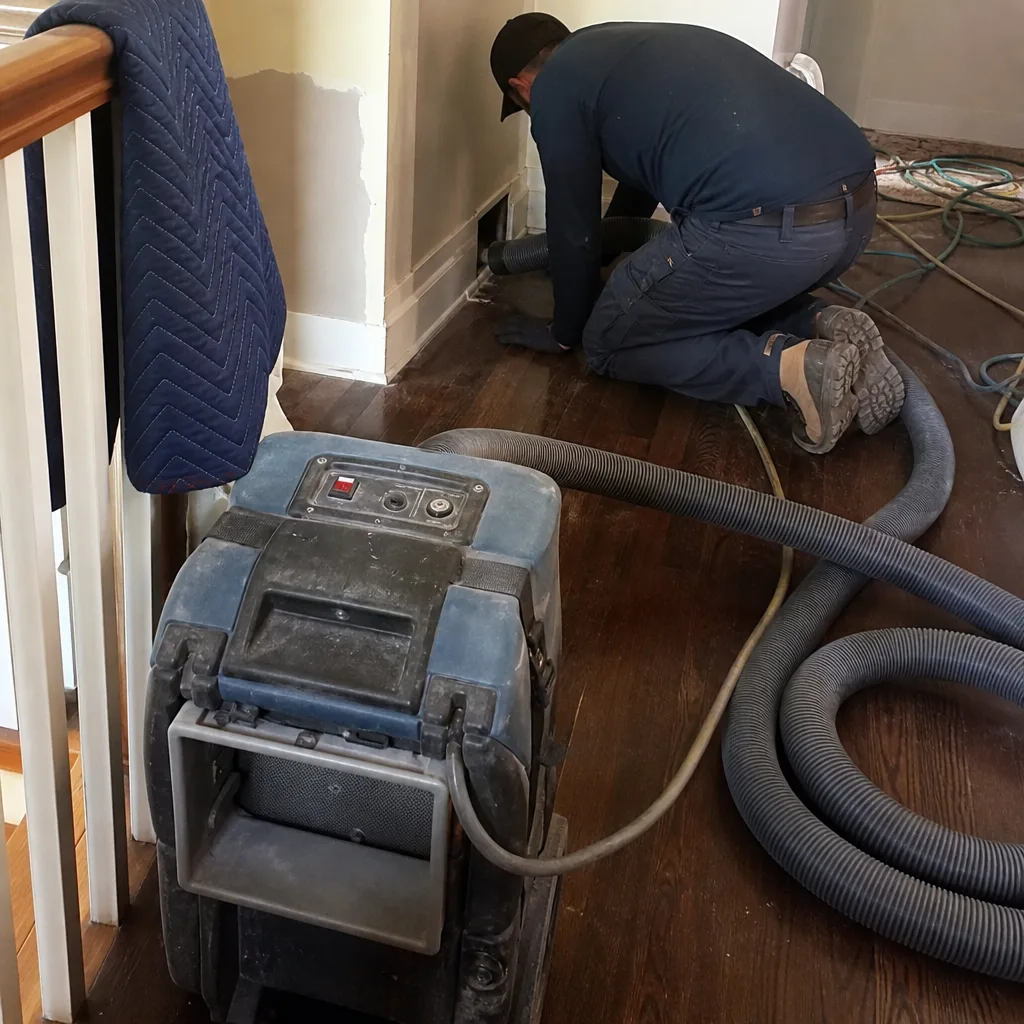 Before
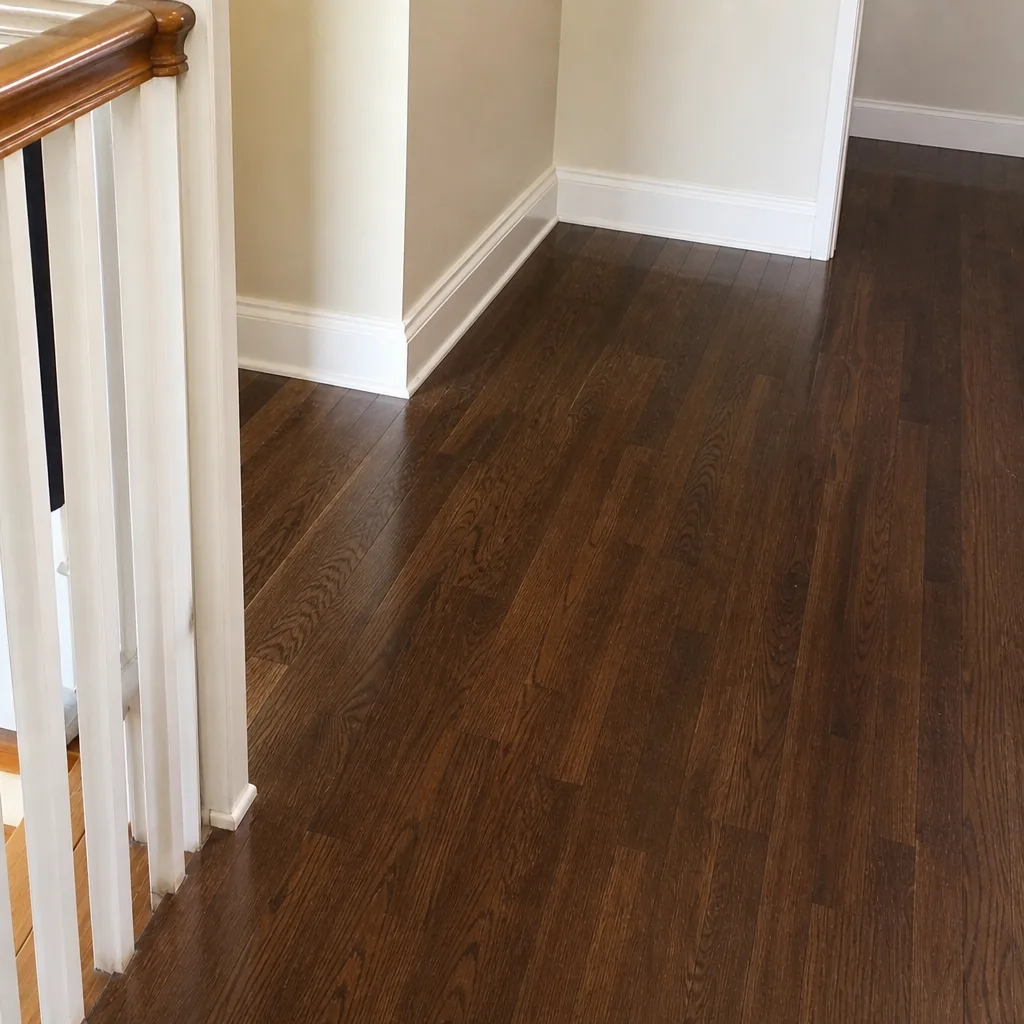 After
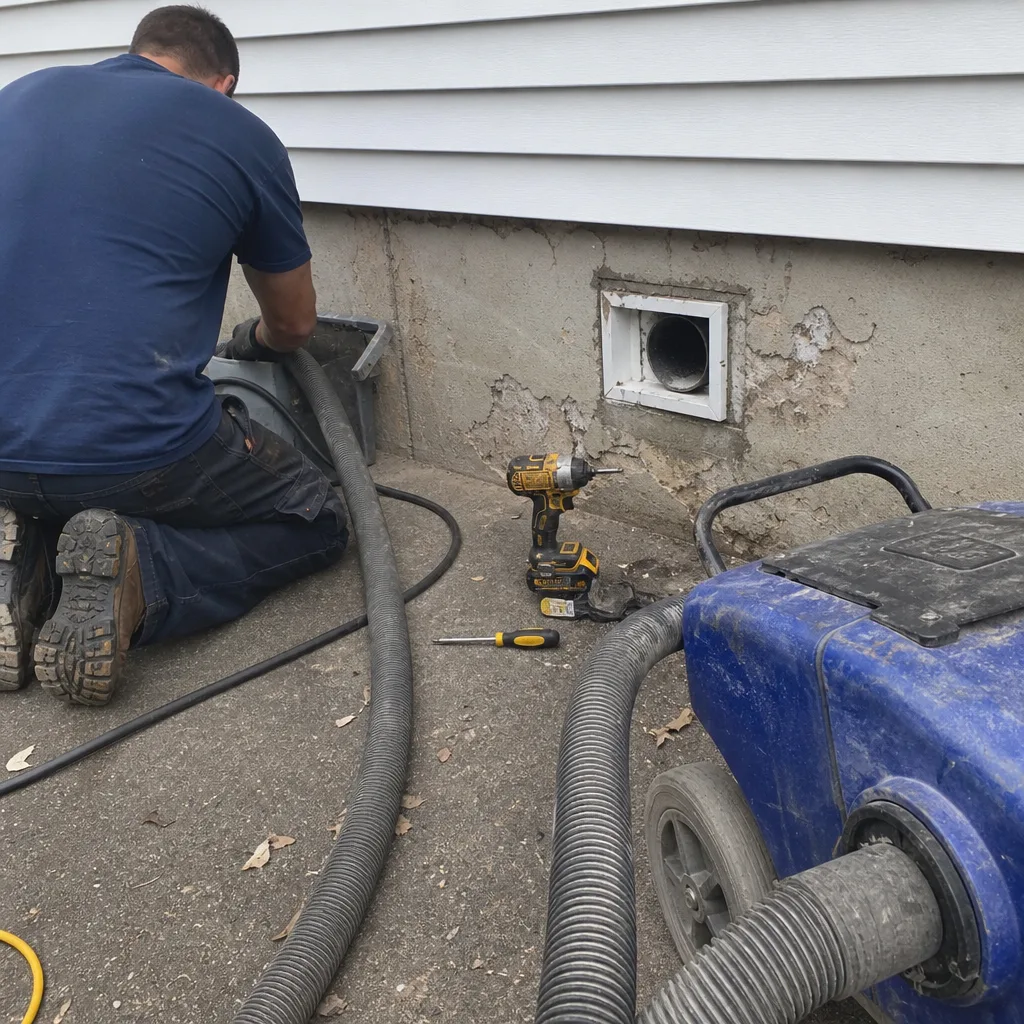 Before
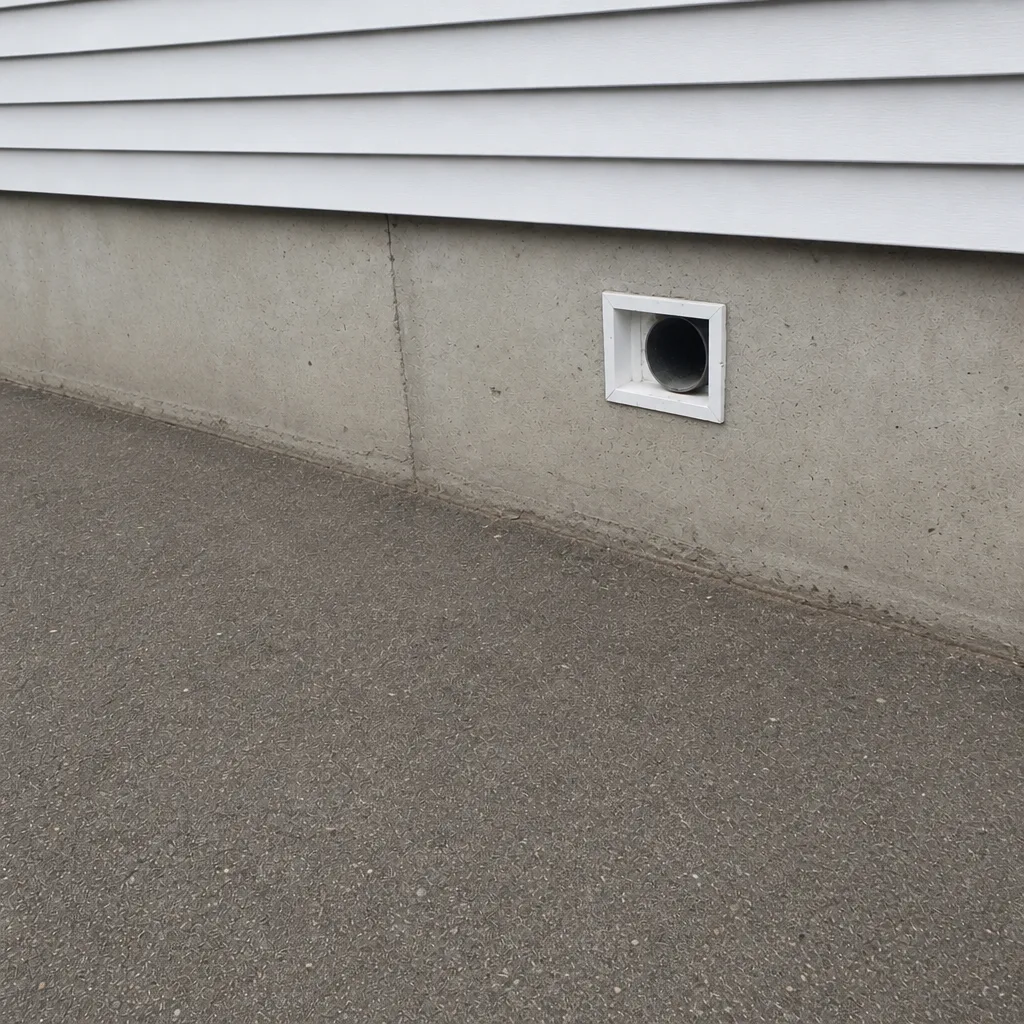 After
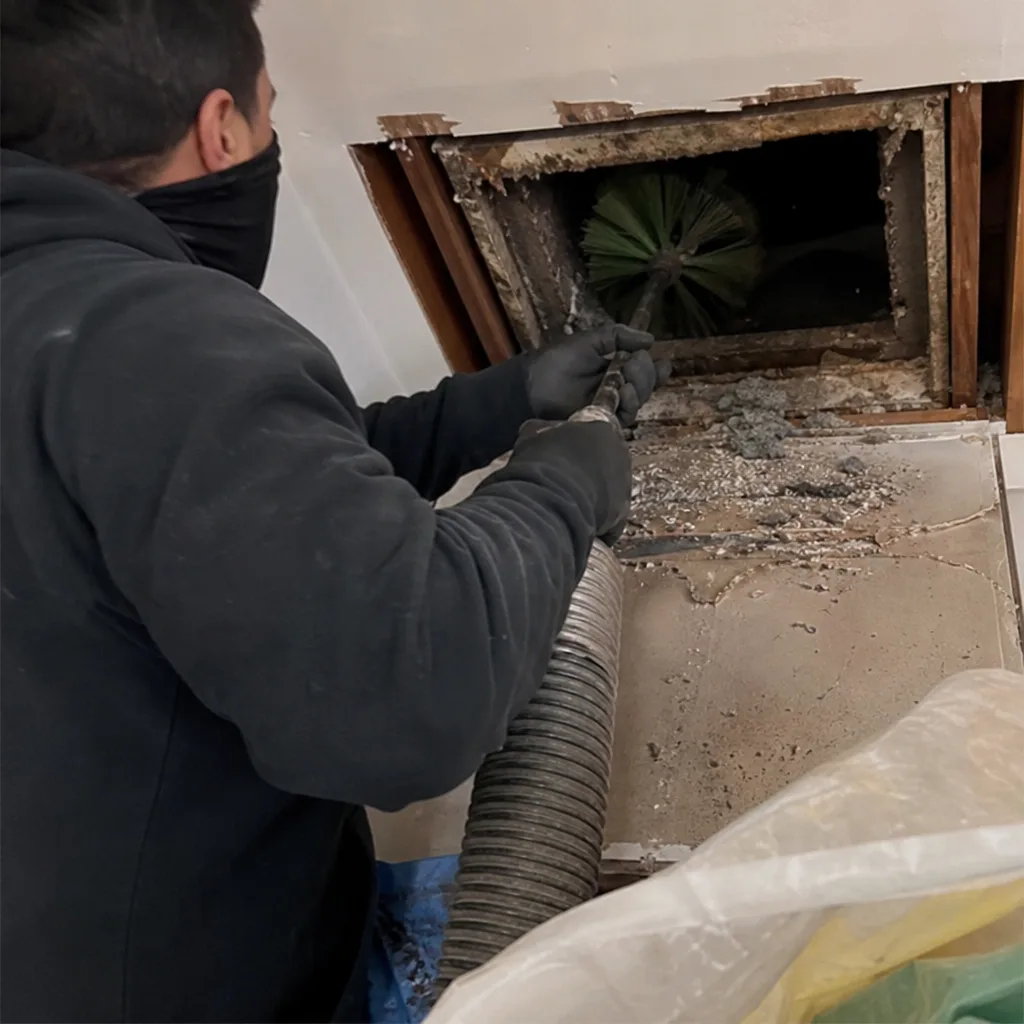 Before
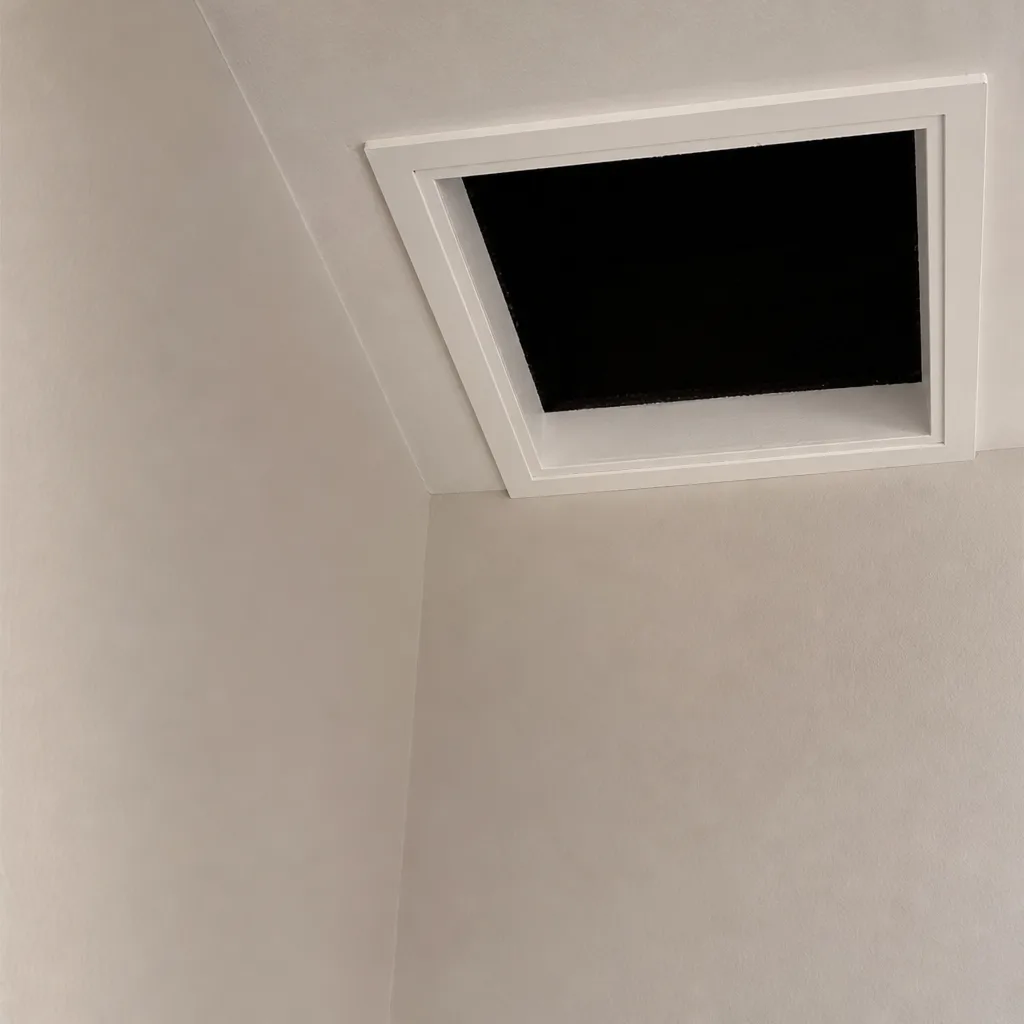 After
When to Call a Professional
Call a professional when the odor only appears at startup, when the musty smell survives a filter change, or when staining around a register is paired with weak airflow in that room. Call when you’ve had interior work done and the returns weren’t covered, when you notice droppings or nesting material anywhere near a register or a duct run, or when one room consistently runs hotter or cooler than the rest of the house. Those are the cases where the fix depends on the diagnosis, and where the work runs beyond vacuuming. Our technicians have up to 13 years of experience scoping exactly these situations.
Air Duct Cleaning Great Kills offers free estimates in Great Kills. Call (844) 625-7163. We answer 24/7. Fast dispatch from 7am to 7pm, Sunday through Friday. Every job is scoped on a written estimate, before-and-after photos of your ducts are part of the job, and a customer satisfaction guarantee backs the work. The local pro we connect you with is licensed and insured as their state requires.
Frequently Asked Questions
The most reliable are an odor that only appears at startup, a musty smell that survives a filter change, dark staining around a supply register, and uneven airflow between rooms. Dust at every register is usually a filter or cabinet bypass problem rather than a duct problem, so it’s the least reliable sign on its own. If two or more of the reliable signs show up together, that’s when the work is worth scoping. Call (844) 625-7163 for an exact quote; estimates are free.
Filter failure shows dust at most or all registers plus a visible gap or wrong-size filter at the slot. Dirty ducts show an odor at startup, staining at specific registers, and uneven airflow rather than visible dust everywhere. Look at the cabinet shelf for a dust line, and check whether the filter is torn or oversized for its slot. If the pattern is unclear, an inspection sorts it out quickly. Call (844) 625-7163 and we’ll take a look; estimates are free.
An odor that appears only at startup usually means material has settled in the supply trunks and gets pushed into the rooms with the first air, then dilutes. A musty read on that smell points to biological growth, which calls for mechanical cleaning followed by a Guardsman-grade sanitizing treatment. Filter changes won’t fix it, because the source is downstream of the filter. Call (844) 625-7163 for an exact quote; estimates are free.
If the returns were left uncovered during the work, yes. Drywall dust, fiberglass particles, and construction debris travel through the system and settle in the runs, and the signs often don’t show up until months later. The work should be done with containment and negative air pressure so the debris isn’t pushed back into the rooms. Call (844) 625-7163 to book an inspection; estimates are free.
No. Pest activity is a biohazard rather than a dust problem, so it needs mechanical cleaning to remove the material followed by a sanitizing treatment applied to the duct surfaces afterward. Sanitizing without cleaning first doesn’t work, and cleaning without sanitizing leaves residue in place. That’s a two-stage job. Call (844) 625-7163 for an exact quote; estimates are free.
There’s no fixed schedule that fits every home. Households with pets, recent renovations, past pest activity, or members with allergies usually benefit from more frequent attention, while a home with a properly sealed system, clean filters, and no odor can go longer between cleanings. The signs in this guide tell you more than a calendar does. When in doubt, an inspection answers it. Call (844) 625-7163 to book one; estimates are free.
Ask for before-and-after photos of your own ducts, not stock images. A process that uses containment with negative air pressure is also visible on the day, and it’s a clear sign the crew is treating the job as controlled work rather than a blow-out. Every job we scope is done on a written estimate, and photos of your ducts are part of the record. Call (844) 625-7163; estimates are free.
The Bottom Line
The signs that matter most are the ones that point to a specific cause. An odor at startup, a musty smell that survives a filter change, staining around a register, uneven airflow between rooms, debris after a renovation, and traces of pest activity each point at something different inside the system. Dust at every register usually points at the filter instead. Read the signs together, get an inspection that covers the cabinet, the returns, and the duct runs before a price is named, and ask for before-and-after photos of your own ducts. That’s the honest path from a symptom to the right work, and it’s how we approach every system in Great Kills.
If you’ve spotted any of these signs in your home, call Air Duct Cleaning Great Kills at (844) 625-7163 for a free estimate. Related services are available, including air duct cleaning, dryer vent cleaning, and HVAC cleaning. You can also read more on our main air duct cleaning page.
Written by the team at Air Duct Cleaning Great Kills.